Por Lic. Jorge Ricardo Dahdah Cuevas, Director General de Miura
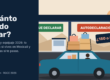
Estas semanas mucha gente de Mexicali va a cruzar a Calexico y El Centro. El 25 de noviembre empieza el periodo de invierno de Heroínas y Héroes Paisanos, que dura hasta el 8 de enero de 2027; el 27 es Black Friday, el 30 Cyber Monday y luego vienen las compras de Navidad. Y al regresar, en la fila, la pregunta de siempre: ¿cuánto puedo pasar sin pagar?
Depende de tu caso. Mucha gente cree que todos tenemos 500 dólares y no es así: si vives en Mexicali y regresas de Calexico, el monto es otro. Con base en las Reglas Generales de Comercio Exterior para 2026, aquí va qué te toca, qué hacer si te pasas y qué no debes cruzar.
Equipaje y franquicia no son lo mismo
El equipaje son tus cosas de uso personal, nuevas o usadas: ropa, calzado, artículos de aseo, celulares, laptop y otros artículos que la ley enlista, incluido algo de alcohol y tabaco si eres mayor de 18 años. Por tu equipaje no pagas nada.
La franquicia es todo lo demás que traes, distinto a tu equipaje: tus compras. Entra sin pagar impuestos hasta cierto monto en dólares, que depende de tu caso. Si te pasas, pagas impuestos solo sobre lo que rebasa ese monto.
Cuánto te toca según tu caso
| Tu caso | Monto libre de impuestos | Base legal |
| Vives en Mexicali (franja fronteriza) y regresas de Calexico | 150 USD por día, por persona mayor de edad. 400 USD en conjunto si en tu vehículo particular vienen más de dos personas | Regla 3.4.1 |
| Llegas a México como pasajero internacional (por ejemplo, en avión) | 500 USD por persona, todo el año. Se acumula por familia si llegan juntos en el mismo medio de transporte | Regla 3.2.3 |
| Viajas de Mexicali al interior del país | 500 USD durante Héroes Paisanos. 500 USD por mercancía comprada en la franja, con factura (CFDI) expedida en la franja | Reglas 3.2.1 y 3.2.3 |
Caso 1: vives en Mexicali y vas de compras a Calexico
Es el caso de la mayoría de los mexicalenses en estas fechas. Como residente de la franja fronteriza, puedes importar mercancía para tu consumo personal por un valor de hasta 150 dólares al día. Si cruzas en tu vehículo particular y vienen más de dos personas, el total de lo que traen entre todos no debe pasar de 400 dólares.
- Los 150 dólares no cubren bebidas alcohólicas, cerveza ni tabaco. Esos productos no van en la franquicia, pero sí los puedes traer como equipaje (ver la sección de alcohol y tabaco). La gasolina solo pasa libre la del tanque de tu vehículo.
- Es para consumo personal: no aplica a mercancía que quieras deducir para tu negocio.
- La aduana puede pedirte que acredites que eres mayor de edad y que vives en la franja, con tu credencial para votar y un comprobante de domicilio a tu nombre (recibo de luz o teléfono, o contrato de arrendamiento).
- El periodo de Héroes Paisanos no aumenta estos montos.
Caso 2: regresas a México como pasajero internacional
Si regresas de un viaje al extranjero, por ejemplo en avión, puedes traer además de tu equipaje mercancía por un valor de hasta 500 dólares por persona, sin importar si llegas por tierra, aire o mar. Los integrantes de una misma familia pueden sumar sus franquicias si llegan juntos y en el mismo medio de transporte.
Acreditas el valor con facturas o notas de venta. Si no las traes, el personal de la aduana puede determinar el valor de la mercancía. El alcohol y el tabaco no van dentro de estos 500 dólares; van como equipaje, como explicamos más abajo.
Caso 3: viajas de Mexicali al interior del país
Esto suele sonar raro, porque Mexicali y Guadalajara están en México. La razón es que Mexicali está en la región fronteriza, que tiene un régimen aduanero propio: la mercancía extranjera que entra aquí se considera importada a la región, no al resto del país. Por eso las reglas consideran pasajero también a quien sale de la franja o región fronteriza hacia el interior (regla 3.2.1), y por eso la aduana revisa en las salidas hacia el resto del país. En ese trayecto aplican dos beneficios:
- Durante los periodos de Heroínas y Héroes Paisanos, puedes llevar al interior mercancía por hasta 500 dólares. El periodo de invierno 2026 va del 25 de noviembre de 2026 al 8 de enero de 2027.
- Si compraste la mercancía en la franja fronteriza y lo acreditas con factura (CFDI) expedida en la franja, aplica un monto de 500 dólares, que también se puede acumular por familia.
Lo que puedes traer como equipaje
Según la regla 3.2.3, además de tus compras puedes traer como equipaje, sin pagar impuestos, entre otros:
- Ropa, calzado y productos de aseo y belleza acordes a la duración del viaje (incluido un ajuar de novia) y artículos para bebé como silla, cuna portátil, carriola y andadera.
- Dos cámaras fotográficas o de video, tres celulares, un GPS, dos tabletas, dos laptops, una impresora portátil y un proyector portátil, con sus accesorios.
- Dos equipos deportivos personales, cuatro cañas de pesca y tres deslizadores, con o sin vela.
- Un aparato de sonido portátil, o dos de imagen y sonido digital y un reproductor de DVD portátil, y un juego de bocinas portátiles.
- Cinco juguetes, una consola y cinco videojuegos; libros y revistas.
- Medicamentos de uso personal y aparatos para medir presión y glucosa. Los psicotrópicos requieren receta médica.
- Dos instrumentos musicales, un binocular, un telescopio y artículos para acampar.
- Un juego de herramienta de mano con su estuche (puede incluir taladro, pinzas, llaves, dados y desarmadores).
- Para adultos mayores y personas con discapacidad, artículos como andaderas, sillas de ruedas, muletas y bastones.
- Hasta tres mascotas (perros, gatos y otras especies de compañía que enlista la regla), con certificado zoosanitario de SADER.
Alcohol, tabaco y gasolina
Aquí hay que separar bien equipaje y franquicia. Como parte de tu equipaje, cada persona mayor de 18 años puede traer sin pagar hasta tres litros de bebidas alcohólicas y seis litros de vino, y veinte cajetillas de cigarros, veinticinco puros o doscientos gramos de tabaco. La regla 3.2.3 aplica el equipaje a los pasajeros en viajes internacionales, sean residentes en México o en el extranjero, así que también te aplica si vives en Mexicali y regresas de Calexico.
Lo que no puedes hacer es meter alcohol o tabaco dentro de la franquicia: ni en los 150 dólares del residente fronterizo ni en los 500 del pasajero internacional. Si traes más de lo que permite el equipaje, se paga aparte. Si vives en Mexicali, la regla 3.4.3 te permite pagar hasta 50 dólares de estos productos sin agente aduanal, con el formato D7, con tasas de 77% a 114% en bebidas, según su graduación, y de 401% a 691% en tabaco. Pueden ser menores si el producto es de un país con tratado comercial, como Estados Unidos.
¿Y si me paso del monto?
Si te pasas no pierdes tus compras. La regla 3.2.2 te permite pagar los impuestos tú mismo, sin agente aduanal, con una tasa de 19% sobre lo que rebase tu franquicia.
- Dirígete al carril de “Autodeclaración”, no al de “Nada que declarar”.
- Este procedimiento aplica si el excedente no pasa de 3,000 dólares (4,000 dólares si incluye equipo de cómputo). Por encima de eso necesitas un agente aduanal.
- Puedes pagar en la aduana con el formato D7 o con el formato FCF. También puedes pagar por anticipado a través del portal del SAT, en el banco o por transferencia, y el pago vale 30 días.
- No aplica a mercancía que requiere permisos o normas oficiales (NOM), ni a polvos, líquidos o gases difíciles de identificar.
- El pago es definitivo: no se deduce ni se devuelve.
Algunos ejemplos
| Situación | Cuenta | Resultado |
| Ana vive en Mexicali, cruza sola y regresa con 230 USD en ropa | 150 USD libres. Paga 19% de los 80 restantes: unos 15 USD | Carril de Autodeclaración |
| Luis vive en Mexicali y regresa de Calexico con dos botellas de tequila (1.5 litros) y 100 USD en ropa | El tequila va como equipaje; la ropa cabe en sus 150 USD | Nada que declarar |
| Tres adultos regresan en el mismo auto con 390 USD en total | Por debajo del tope de 400 USD | Nada que declarar |
| Una pareja regresa en avión de un viaje con 900 USD en compras | 2 × 500 = 1,000 USD de franquicia | Nada que declarar |
| Una familia sale de Mexicali a Guadalajara el 20 de diciembre con 450 USD en regalos comprados en Calexico | Dentro de los 500 USD de Héroes Paisanos | No paga en la revisión hacia el interior |
Ejemplos ilustrativos. La aduana aplica el tipo de cambio del día.
¿Qué pasa si no declaro?
Declarar no te genera multa. El problema es que en una revisión te encuentren algo que no declaraste:
- Si el valor no pasa de 3,000 dólares y solo faltó pagar impuestos, la aduana calcula los impuestos y la multa para que pagues en el momento. La suma puede llegar al 116% del valor de la mercancía.
- Si pasa de 3,000 dólares, se inicia un procedimiento administrativo en materia aduanera (PAMA) y la mercancía puede quedar embargada.
- Si la mercancía requiere un permiso que no tienes, pagas la multa y puedes abandonarla, o se inicia el procedimiento.
Lo que nunca debes cruzar a México, o debes declarar
- Armas de fuego, cartuchos y cargadores: ingresarlos a México es un delito grave, aunque digas que los olvidaste en el auto. Revisa tu vehículo antes de cruzar.
- Vapeadores, drogas (incluida la marihuana medicinal), cuchillos y espadas, y pirotecnia sin autorización.
- Efectivo, cheques u otros documentos por cobrar por más de 10,000 dólares: debes declararlos con el formato D4.
- Medicamentos psicotrópicos solo con receta, y mascotas solo con certificado zoosanitario.
Al cruzar hacia Estados Unidos
La revisión también ocurre del otro lado. La Oficina de Aduanas y Protección Fronteriza de EE. UU. (CBP) pide declarar todos los productos agrícolas: frutas, verduras, carnes, semillas y plantas. El huevo crudo y la carne de ave de México están prohibidos.
- No declarar productos agrícolas cuesta desde 300 dólares la primera vez y puede llegar a 1,000 dólares o más. Si lo declaras y está prohibido, solo te lo retiran.
- CBP ha advertido que estas faltas pueden afectar tu posibilidad de seguir visitando Estados Unidos.
- Más de 10,000 dólares en efectivo deben reportarse a CBP.
- CBP también revisa a quienes van hacia México para detener armas y municiones.
Antes de cruzar
- Ubica tu caso: residente fronterizo (150/400 USD), pasajero internacional (500 USD) o viaje al interior (500 USD).
- Guarda tickets y facturas, y súmalos por persona.
- El alcohol y el tabaco van como equipaje: hasta 3 litros de licor, 6 de vino y 20 cajetillas por adulto.
- Lleva tu INE y un comprobante de domicilio.
- Si te pasas, usa el carril de Autodeclaración y paga el 19%.
- Revisa tu auto: cero cartuchos, vapeadores o comida sin declarar.
Franquicia y equipaje 2026: preguntas frecuentes
Estas son las dudas que más se escuchan en estas fechas entre quienes cruzan a Calexico y El Centro. Las respuestas se basan en las Reglas Generales de Comercio Exterior para 2026 y en información de la ANAM y de CBP.
1. Vivo en Mexicali y voy de compras a Calexico. ¿Cuánto puedo pasar sin pagar impuestos?
Hasta 150 dólares por día por cada persona mayor de edad. Si cruzan en un vehículo particular y vienen más de dos personas, el total de lo que traen entre todos no debe pasar de 400 dólares (regla 3.4.1).
2. Siempre escucho que son 500 dólares. ¿Entonces de dónde sale eso?
Los 500 dólares son la franquicia de quien regresa a México de un viaje internacional y no vive en la franja fronteriza, por ejemplo quien llega en avión. También aplican a quien viaja de Mexicali al interior del país en Héroes Paisanos o con compras hechas en la frontera. Si vives en Mexicali y regresas de Calexico, tu franquicia es de 150 dólares.
3. ¿Héroes Paisanos me sube la franquicia al regresar de Calexico?
No. Durante Héroes Paisanos (en invierno, del 25 de noviembre de 2026 al 8 de enero de 2027), el beneficio de 500 dólares es para quien sale de la franja fronteriza hacia el resto del país. Si vives en Mexicali y regresas de Calexico, siguen siendo 150 dólares.
4. Voy de Mexicali a Guadalajara en diciembre con regalos. Si no salgo de México, ¿por qué aplica la franquicia?
Aunque no sales de México, sí pasas por una revisión de la aduana. Mexicali está en la región fronteriza, que tiene su propio régimen aduanero: lo que entra aquí se considera importado a la región, no al resto del país. Por eso, quien sale de la región hacia el interior también se considera pasajero (regla 3.2.1). En Héroes Paisanos (25 de noviembre de 2026 al 8 de enero de 2027) puedes llevar al interior hasta 500 dólares en mercancía sin pagar. Además, lo que compraste en la frontera y amparas con factura (CFDI) emitida aquí tiene un monto de 500 dólares todo el año, que también se puede sumar en familia.
5. ¿Mi ropa, mi celular o mi laptop cuentan dentro de la franquicia?
No. Son equipaje, nuevos o usados, y por el equipaje no pagas nada, siempre que esté dentro de los límites de la regla 3.2.3: por ejemplo, hasta 3 celulares, 2 laptops, 2 tabletas y 2 cámaras, y ropa acorde a la duración del viaje. La franquicia es lo demás que traes.
6. ¿Podemos juntar la franquicia de toda la familia?
Si regresan de un viaje internacional, sí: las franquicias de los integrantes de una familia se suman cuando llegan juntos y en el mismo medio de transporte. Si viven en Mexicali y regresan de Calexico, el tope para el vehículo es de 400 dólares si vienen más de dos personas.
7. ¿Los niños cuentan?
La franquicia del residente fronterizo (regla 3.4.1) está pensada para personas mayores de edad. Si tienes un caso específico con menores en el carro, lo mejor es confirmarlo directamente con la aduana.
8. ¿Qué carril debo usar en la garita?
Si solo traes tu equipaje y lo que cabe en tu franquicia, el de “Nada que declarar”. Si traes más, el de “Autodeclaración”, donde describes lo que traes y pagas los impuestos.
9. Me pasé de la franquicia. ¿Me van a quitar mis compras?
No necesariamente. Puedes declarar y pagar una tasa de 19% sobre lo que rebasa tu franquicia, sin agente aduanal, siempre que el excedente no pase de 3,000 dólares (4,000 si incluye equipo de cómputo) y la mercancía no requiera permiso o NOM (regla 3.2.2).
10. ¿Dónde y cómo pago?
En la aduana, con el formato D7 o con el formato FCF. También puedes pagar por adelantado: generas el formato en el portal del SAT y pagas en el banco o por transferencia. Ese pago vale 30 días y al cruzar entregas el formato y el comprobante.
11. ¿Qué pasa si no declaro y me revisan?
Si el valor no pasa de 3,000 dólares y solo faltó pagar impuestos, te cobran ahí mismo impuestos y multa, que juntos pueden llegar a 116% del valor de la mercancía. Si pasa de 3,000 dólares, se abre un procedimiento administrativo (PAMA) y pueden embargar la mercancía.
12. No traigo el ticket de lo que compré. ¿Qué pasa?
El valor se comprueba con la factura o nota de venta. Si no la traes, el personal de la aduana puede determinar el valor de la mercancía. Por eso conviene guardar todos los tickets.
13. ¿Me pueden pedir algún documento?
Sí. Como residente fronterizo te pueden pedir que compruebes que eres mayor de edad y que vives en la franja, por ejemplo con tu INE y un comprobante de domicilio a tu nombre (recibo de luz o teléfono, o contrato de arrendamiento).
14. ¿Puedo pasar cerveza, vino o licor?
Sí, como equipaje. Cada persona mayor de 18 años puede traer sin pagar hasta 3 litros de bebidas alcohólicas y 6 de vino, también si vive en Mexicali y regresa de Calexico, porque la regla 3.2.3 aplica el equipaje a los pasajeros en viajes internacionales, sean residentes en México o en el extranjero. Lo que no se puede es meter alcohol dentro de la franquicia (los 150 o los 500 dólares). Si traes más de lo que permite el equipaje, se paga aparte: si vives en Mexicali, hasta 50 dólares con el formato D7, con una tasa de 77% a 114% según la graduación.
15. ¿Y los cigarros o la gasolina?
Igual que el alcohol: como equipaje, cada persona mayor de 18 años puede traer sin pagar 20 cajetillas de cigarros, 25 puros o 200 gramos de tabaco, también si vive en Mexicali. No van dentro de la franquicia, y lo que pase de esas cantidades se paga aparte, con tasas altas (401% a 691%). De gasolina, solo pasa libre la que trae el tanque de tu vehículo.
16. ¿Puedo usar la franquicia para traer mercancía para mi negocio o para vender?
No. La franquicia es para consumo personal y no aplica a mercancía que quieras deducir. Para importar mercancía para un negocio se necesita una importación formal, con agente aduanal.
17. ¿Puedo traer a mi mascota o mis medicinas?
Sí. Puedes traer hasta tres mascotas de compañía con su certificado zoosanitario de SADER, y medicinas de uso personal. Las medicinas controladas (psicotrópicos) solo con receta médica.
18. ¿Qué no debo pasar a México por ningún motivo?
Armas de fuego, cartuchos y cargadores: es un delito grave, aunque los traigas olvidados en el carro. Tampoco vapeadores, drogas (incluida la marihuana medicinal), cuchillos, espadas ni pirotecnia sin autorización.
19. ¿Tengo que declarar si traigo mucho efectivo?
Si traes más de 10,000 dólares (o su equivalente) en efectivo, cheques u otros documentos por cobrar, debes declararlo con el formato D4. Al entrar a Estados Unidos, esa misma cantidad se reporta ante CBP.
20. ¿Y al cruzar hacia Calexico, qué revisa Estados Unidos?
CBP pide declarar toda la comida y los productos agrícolas: fruta, verdura, carne, semillas y plantas. El huevo crudo y la carne de pollo de México no pasan. No declarar cuesta desde 300 dólares y puede llegar a 1,000 o más, y CBP ha advertido que puede afectar que sigas entrando a Estados Unidos.
Equipaje y franquicia 2026: lo que puedes pasar
Por tu equipaje no pagas nada. La franquicia es lo demás que traes, distinto al equipaje; si te pasas, pagas solo sobre el excedente. Base: regla 3.2.3, fracción I, de las Reglas Generales de Comercio Exterior para 2026.
1. Equipaje personal (sin alcohol ni tabaco)
| Descripción | Cantidad |
| Ropa, calzado y productos de aseo y belleza | Los que vayan de acuerdo con la duración del viaje (incluye ajuar de novia) |
| Artículos para bebé: silla, cuna portátil, carriola, andadera y sus accesorios | Los de uso del bebé |
| Cámaras fotográficas o de video | 2 |
| Material fotográfico | El de uso personal |
| Celulares u otros equipos de redes inalámbricas | 3 |
| GPS | 1 |
| Agenda electrónica | 1 |
| Tabletas | 2 |
| Laptops (notebook, omnibook o similares) | 2 |
| Copiadora o impresora portátil | 1 |
| Quemador | 1 |
| Proyector portátil, con accesorios | 1 |
| Equipos deportivos personales | 2 |
| Cañas de pescar | 4 |
| Deslizadores (tablas), con o sin vela, y sus accesorios | 3 |
| Trofeos o reconocimientos | Los que puedas transportar normalmente |
| Aparato portátil de sonido (grabación o reproducción) o mixto | 1 |
| En lugar del anterior: aparatos de imagen y sonido digital + reproductor de DVD portátil | 2 + 1 |
| Juego de bocinas portátiles, con accesorios | 1 |
| Discos láser | 5 |
| Discos DVD | 10 |
| Discos compactos (CD) | 30 |
| Paquetes de software | 3 |
| Dispositivos de almacenamiento (USB, discos, memorias) | 5 |
| Libros, revistas y documentos impresos | Sin cantidad fija (uso personal) |
| Juguetes, incluidos los de colección | 5 |
| Consola de videojuegos | 1 |
| Videojuegos | 5 |
| Aparato para medir la presión | 1 |
| Aparato para medir glucosa (o mixto), con sus reactivos | 1 |
| Medicamentos de uso personal | Los de uso personal (psicotrópicos solo con receta) |
| Maletas, velices, petacas o baúles | Los necesarios para llevar tu equipaje |
| Binoculares | 1 |
| Telescopio | 1 |
| Instrumentos musicales, con accesorios | 2 |
| Tienda de campaña y artículos para acampar | 1 tienda y sus artículos |
| Para adultos mayores o personas con discapacidad: andaderas, sillas de ruedas, muletas, bastones | Los que necesiten |
| Juego de herramienta de mano con su estuche (taladro, pinzas, llaves, dados, desarmadores, cables) | 1 |
| Mascotas (perros, gatos y otras especies de compañía que enlista la regla), con sus accesorios | Hasta 3, con certificado zoosanitario de SADER |
Los artículos electrónicos y deportivos incluyen sus accesorios.
2. Alcohol y tabaco como equipaje (mayores de 18 años)
| Descripción | Cantidad por persona |
| Bebidas alcohólicas (licor, cerveza, etc.) | Hasta 3 litros |
| Vino | Hasta 6 litros |
| Cigarros | 20 cajetillas |
| Puros | 25 |
| Tabaco | 200 gramos |
De tabaco es una de las tres opciones: 20 cajetillas, o 25 puros, o 200 gramos. Aplica también a quien vive en Mexicali y regresa de Calexico. El alcohol y el tabaco no pueden entrar dentro de la franquicia (150 o 500 USD). Gasolina: solo la del tanque del vehículo.
3. Resumen de montos
| Caso | Monto |
| Vives en Mexicali y regresas de Calexico | 150 USD por día, por adulto · 400 USD en total si vienen más de dos personas en el carro |
| Regresas de un viaje internacional (no vives en la frontera) | 500 USD por persona · se suma en familia si llegan juntos |
| Vas de Mexicali al interior del país | 500 USD en Héroes Paisanos (25 nov 2026 – 8 ene 2027) · 500 USD por compras en la frontera con factura (CFDI) de aquí, todo el año |
| Si te pasas de la franquicia | Pagas 19% solo sobre el excedente · hasta 3,000 USD de excedente (4,000 si traes equipo de cómputo); más de eso, agente aduanal |
| Alcohol o tabaco arriba del equipaje (residente) | Hasta 50 USD pagando con formato D7 · 77% a 114% en bebidas, 401% a 691% en tabaco |
| Efectivo | Más de 10,000 USD se declara (formato D4 en México; reporte a CBP en EE. UU.) |
| Si no declaras | Hasta 3,000 USD: impuestos + multa, hasta 116% del valor · Más de 3,000 USD: PAMA y posible embargo |
| Comida no declarada al entrar a EE. UU. | Multa desde 300 USD y hasta 1,000 USD o más |
Información general con base en las disposiciones vigentes en noviembre de 2026. Ante cualquier duda, consulta en la aduana.
Fundamento
- Reglas Generales de Comercio Exterior para 2026 (DOF, 27 de diciembre de 2025): reglas 3.2.1, 3.2.2, 3.2.3, 3.2.6, 3.4.1 y 3.4.3.
- Ley Aduanera, artículos 50, 61, 88, 150 y 152.
- Agencia Nacional de Aduanas de México (ANAM): Equipaje y franquicia, y periodos 2026 del Programa Heroínas y Héroes Paisanos (anam.gob.mx).
- U.S. Customs and Border Protection (cbp.gov): ingreso de productos agrícolas por viajeros.
Este artículo es informativo y se basa en las disposiciones vigentes en noviembre de 2026. No sustituye la asesoría de un profesional ni el criterio de la autoridad aduanera en cada caso.
Sobre Miura
Miura es una firma de comercio exterior, aduanas y logística con base en Mexicali y operaciones en los corredores Mexicali–Calexico, Nogales y Laredo. ¿Dudas sobre importaciones, exportaciones o cumplimiento aduanero para tu empresa? Visítanos en www.miuraops.com.
How Much Can I Bring? A 2026 Guide to Baggage and Duty-Free Allowances for the Holiday Shopping
By Lic. Jorge Ricardo Dahdah Cuevas, CEO of Miura
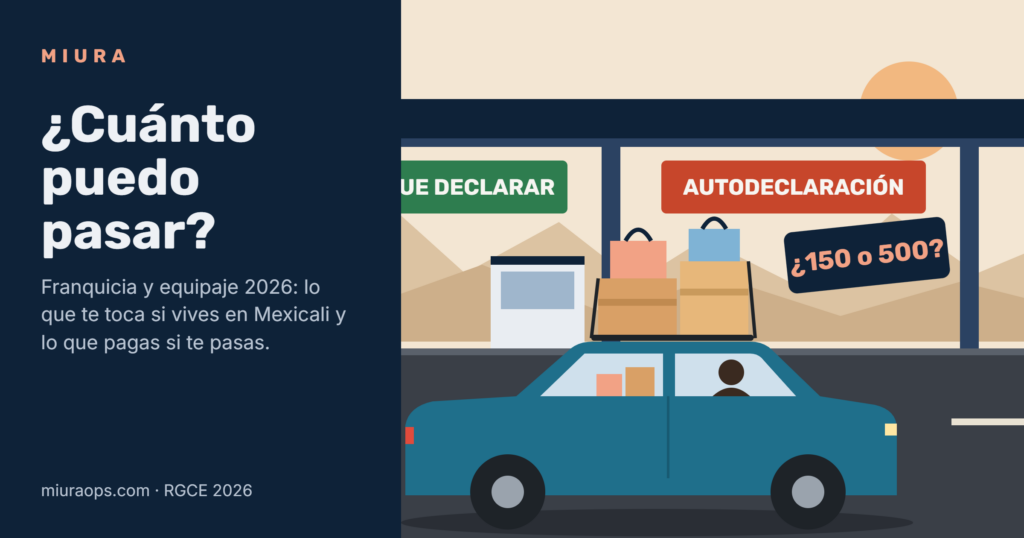
Over the next few weeks a lot of people from Mexicali will cross to shop in Calexico and El Centro. The winter period of Mexico’s Heroínas y Héroes Paisanos program starts November 25 and runs to January 8, 2027; Black Friday is November 27, Cyber Monday November 30, and then comes Christmas shopping. And on the way back, standing in line, the usual question: how much can I bring without paying?
It depends on your case. Many people think everyone gets 500 dollars, and that isn’t so: if you live in Mexicali and come back from Calexico, the amount is different. Based on Mexico’s 2026 General Foreign Trade Rules (RGCE), here is what applies to you, what to do if you go over, and what you shouldn’t bring across.
Baggage and the allowance are not the same thing
Baggage (equipaje) is your personal-use items, new or used: clothes, shoes, toiletries, phones, laptop and other items the law lists, including some alcohol and tobacco if you are 18 or older. You pay nothing on your baggage.
The duty-free allowance (franquicia) is everything else you bring, other than your baggage: your shopping. It comes in tax-free up to a dollar amount that depends on your case. If you go over, you pay tax only on the amount above it.
How much you get, case by case
| Your case | Duty-free amount | Legal basis |
| You live in Mexicali (border zone) and return from Calexico | USD 150 per day, per adult. USD 400 combined if more than two people ride in your private vehicle | Rule 3.4.1 |
| You arrive in Mexico as an international passenger (for example, by plane) | USD 500 per person, all year. Family members can combine if they arrive together on the same transport | Rule 3.2.3 |
| You travel from Mexicali to the interior of Mexico | USD 500 during Héroes Paisanos. USD 500 for goods bought in the border zone, with a CFDI invoice issued there | Rules 3.2.1 and 3.2.3 |
Case 1: you live in Mexicali and shop in Calexico
This is the case for most Mexicali residents during these weeks. As a border-zone resident, you may import goods for personal use worth up to USD 150 per day. If you cross in your private vehicle with more than two people, the total that everyone brings must not exceed USD 400.
- The USD 150 does not cover alcoholic beverages, beer or tobacco. Those products are not part of the allowance, but you can bring them as baggage (see the alcohol and tobacco section). Only the fuel in your vehicle’s tank comes in tax-free.
- It is for personal use: it does not apply to goods you intend to deduct for your business.
- Customs may ask you to prove you are an adult living in the border zone, with your voter ID (INE) and proof of address in your name (electricity or phone bill, or lease).
- The Héroes Paisanos period does not raise these amounts.
Case 2: you return to Mexico as an international passenger
If you return from a trip abroad, for example by plane, you may bring goods worth up to USD 500 per person in addition to your baggage, whether you arrive by land, air or sea. Members of the same family can combine their allowances if they arrive together on the same transport.
You prove the value with invoices or receipts. If you don’t have them, customs officers may set the value. Alcohol and tobacco don’t go inside this USD 500; they go as baggage, as explained below.
Case 3: you travel from Mexicali to the interior of Mexico
This usually sounds odd, since Mexicali and Guadalajara are both in Mexico. The reason is that Mexicali is in the border region, which has its own customs regime: foreign goods that come in here are considered imported into the region, not into the rest of the country. That is why the rules also treat as a passenger anyone leaving the border zone for the interior (Rule 3.2.1), and why customs checks traffic heading to the rest of the country. Two benefits apply on that trip:
- During Heroínas y Héroes Paisanos periods, you may take goods worth up to USD 500 into the interior. The 2026 winter period runs from November 25, 2026 to January 8, 2027.
- If you bought the goods in the border zone and can prove it with a CFDI invoice issued there, a USD 500 amount applies, which families can also combine.
What you can bring as baggage
Under Rule 3.2.3, on top of your shopping you may bring as tax-free baggage, among other items:
- Clothes, shoes, toiletries and beauty products in line with the length of the trip (including a bridal trousseau) and baby items such as a car seat, portable crib, stroller and walker.
- Two photo or video cameras, three cell phones, one GPS, two tablets, two laptops, one portable printer and one portable projector, with accessories.
- Two personal sports kits, four fishing rods and three boards, with or without sail.
- One portable sound device, or two digital audio-video devices and a portable DVD player, plus one set of portable speakers.
- Five toys, one video game console and five games; books and magazines.
- Personal-use medicine and blood pressure and glucose meters. Psychotropic drugs require a prescription.
- Two musical instruments, one pair of binoculars, one telescope and camping gear.
- One set of hand tools with its case (it may include a drill, pliers, wrenches, sockets and screwdrivers).
- For seniors and people with disabilities, items such as walkers, wheelchairs, crutches and canes.
- Up to three pets (dogs, cats and the other companion species the rule lists), with a SADER animal health certificate.
Alcohol, tobacco and fuel
Here it is important to keep baggage and the allowance apart. As part of your baggage, each person 18 or older may bring, tax-free, up to three liters of alcoholic beverages and six liters of wine, and twenty packs of cigarettes, twenty-five cigars or two hundred grams of tobacco. Rule 3.2.3 applies baggage to passengers on international trips, whether they reside in Mexico or abroad, so it also applies if you live in Mexicali and come back from Calexico.
What you cannot do is put alcohol or tobacco inside the allowance: not in the border resident’s USD 150 and not in the international passenger’s USD 500. Anything beyond the baggage limit is paid separately. If you live in Mexicali, Rule 3.4.3 lets you pay on up to USD 50 of these products without a customs broker, using form D7, at rates from 77% to 114% for drinks, depending on alcohol content, and from 401% to 691% for tobacco. They can be lower if the product comes from a free-trade partner such as the United States.
What if I go over the amount?
Going over doesn’t mean losing your purchases. Rule 3.2.2 lets you pay the tax yourself, without a customs broker, at a 19% rate on whatever is above your allowance.
- Use the “Self-declaration” (Autodeclaración) lane, not “Nothing to declare”.
- This procedure applies if the excess is no more than USD 3,000 (USD 4,000 if it includes computer equipment). Above that, you need a customs broker.
- You can pay at customs with form D7 or form FCF. You can also pay in advance through the SAT portal, at a bank or by transfer, and the payment is valid for 30 days.
- It does not apply to goods that need permits or official standards (NOM), nor to hard-to-identify powders, liquids or gases.
- The payment is final: it is not deductible or refundable.
A few examples
| Situation | Math | Result |
| Ana lives in Mexicali, crosses alone and returns with USD 230 in clothes | USD 150 tax-free. Pays 19% on the remaining 80: about USD 15 | Self-declaration lane |
| Luis lives in Mexicali and comes back from Calexico with two bottles of tequila (1.5 liters) and USD 100 in clothes | The tequila is baggage; the clothes fit in his USD 150 | Nothing to declare |
| Three adults return in the same car with USD 390 in total | Under the USD 400 cap | Nothing to declare |
| A couple flies home from a trip with USD 900 in purchases | 2 × 500 = USD 1,000 allowance | Nothing to declare |
| A family drives from Mexicali to Guadalajara on December 20 with USD 450 in gifts bought in Calexico | Within the USD 500 Héroes Paisanos amount | Pays nothing at the inland check |
Illustrative examples. Customs applies the exchange rate of the day.
What happens if I don’t declare?
Declaring won’t get you fined. The trouble starts when an inspection turns up something you didn’t declare:
- If the value is USD 3,000 or less and only taxes were missing, customs assesses the taxes and the fine for you to pay on the spot. Together they can reach 116% of the goods’ value.
- Above USD 3,000, a formal customs proceeding (PAMA) begins and the goods can be seized.
- If the goods need a permit you don’t have, you pay the fine and may abandon them, or the proceeding begins.
What you must never bring into Mexico, or must declare
- Firearms, ammunition and magazines: bringing them into Mexico is a serious crime, even if you say you forgot them in the car. Check your vehicle before crossing.
- Vapes, drugs (including medical marijuana), knives and swords, and fireworks without authorization.
- Cash, checks or other receivables over USD 10,000: you must declare them on form D4.
- Psychotropic medicine only with a prescription, and pets only with an animal health certificate.
Crossing into the United States
Inspection happens on the other side too. U.S. Customs and Border Protection (CBP) requires travelers to declare all agricultural products: fruit, vegetables, meat, seeds and plants. Raw eggs and poultry from Mexico are prohibited.
- Failing to declare agricultural products costs from USD 300 the first time and can reach USD 1,000 or more. If you declare it and it is prohibited, it is simply taken.
- CBP has warned that these violations can affect your ability to keep visiting the United States.
- More than USD 10,000 in cash must be reported to CBP.
- CBP also inspects southbound travelers to stop guns and ammunition.
Before you cross
- Know your case: border resident (USD 150/400), international passenger (USD 500) or trip to the interior (USD 500).
- Keep receipts and invoices, and add them up per person.
- Alcohol and tobacco go as baggage: up to 3 liters of liquor, 6 of wine and 20 packs per adult.
- Carry your INE and proof of address.
- If you go over, use the Self-declaration lane and pay the 19%.
- Check your car: no ammunition, vapes or undeclared food.
2026 Duty-Free Allowance and Baggage: Frequently Asked Questions
These are the questions we hear most this time of year from people who cross to shop in Calexico and El Centro. The answers are based on Mexico’s 2026 General Foreign Trade Rules (RGCE) and on information from ANAM and CBP.
1. I live in Mexicali and shop in Calexico. How much can I bring back tax-free?
Up to USD 150 a day for each adult. If you cross in a private vehicle with more than two people, the total everyone brings must not exceed USD 400 (Rule 3.4.1).
2. I always hear it’s 500 dollars. Where does that come from?
The USD 500 is the allowance for people returning to Mexico from an international trip who don’t live in the border zone, for example someone arriving by plane. It also applies to people traveling from Mexicali to the interior during Héroes Paisanos or with goods bought in the border zone. If you live in Mexicali and come back from Calexico, your allowance is USD 150.
3. Does Héroes Paisanos raise my allowance when I come back from Calexico?
No. During Héroes Paisanos (in winter, November 25, 2026 to January 8, 2027), the USD 500 benefit is for people leaving the border zone for the rest of the country. If you live in Mexicali and come back from Calexico, it’s still USD 150.
4. I’m driving from Mexicali to Guadalajara in December with gifts. If I’m not leaving Mexico, why does the allowance apply?
Even though you’re not leaving Mexico, you do go through a customs check. Mexicali is in the border region, which has its own customs regime: goods that come in here count as imported into the region, not into the rest of the country. That’s why anyone leaving the region for the interior is also treated as a passenger (Rule 3.2.1). During Héroes Paisanos (November 25, 2026 to January 8, 2027) you can take up to USD 500 in goods to the interior tax-free. In addition, goods you bought in the border zone and can back with a CFDI invoice issued here have a USD 500 amount all year, which families can also combine.
5. Do my clothes, phone or laptop count against the allowance?
No. They’re baggage, new or used, and you pay nothing on baggage as long as it’s within the limits in Rule 3.2.3: for example, up to 3 phones, 2 laptops, 2 tablets and 2 cameras, and clothes in line with the length of the trip. The allowance is everything else you bring.
6. Can my family put our allowances together?
If you’re coming back from an international trip, yes: family members’ allowances add up when you arrive together on the same transport. If you live in Mexicali and come back from Calexico, the cap for the vehicle is USD 400 if more than two people are riding.
7. Do children count?
The border resident’s allowance (Rule 3.4.1) is written for adults. If you have a specific situation with minors in the car, it’s best to confirm it directly with customs.
8. Which lane should I use at the port of entry?
If you only have your baggage and what fits in your allowance, use “Nothing to declare.” If you have more, use “Self-declaration,” where you describe what you’re bringing and pay the tax.
9. I went over my allowance. Will they take my purchases?
Not necessarily. You can declare and pay a 19% rate on the amount above your allowance, without a customs broker, as long as the excess is no more than USD 3,000 (USD 4,000 if it includes computer equipment) and the goods don’t need a permit or NOM standard (Rule 3.2.2).
10. Where and how do I pay?
At customs, with form D7 or form FCF. You can also pay ahead of time: generate the form on the SAT website and pay at a bank or by transfer. That payment is good for 30 days, and when you cross you hand in the form and the receipt.
11. What happens if I don’t declare and I get inspected?
If the value is USD 3,000 or less and only the tax was missing, you’re charged tax and a fine on the spot, which together can reach 116% of the value of the goods. Above USD 3,000, a formal proceeding (PAMA) is opened and the goods can be seized.
12. I don’t have the receipt for what I bought. What happens?
Value is proven with the invoice or receipt. If you don’t have it, customs officers can set the value of the goods. That’s why it’s worth keeping every receipt.
13. Can they ask me for documents?
Yes. As a border resident you may be asked to prove you’re an adult and that you live in the border zone, for example with your INE and proof of address in your name (an electricity or phone bill, or a lease).
14. Can I bring beer, wine or liquor?
Yes, as baggage. Each person 18 or older can bring up to 3 liters of alcoholic beverages and 6 of wine tax-free, including Mexicali residents coming back from Calexico, because Rule 3.2.3 applies baggage to passengers on international trips, whether they reside in Mexico or abroad. What you can’t do is put alcohol inside the allowance (the USD 150 or 500). If you bring more than the baggage limit, it’s paid separately: if you live in Mexicali, up to USD 50 on form D7, at 77% to 114% depending on alcohol content.
15. What about cigarettes or gasoline?
Same as alcohol: as baggage, each person 18 or older can bring 20 packs of cigarettes, 25 cigars or 200 grams of tobacco tax-free, Mexicali residents included. They don’t go inside the allowance, and anything above those amounts is taxed separately at high rates (401% to 691%). As for gasoline, only what’s in your vehicle’s tank comes in tax-free.
16. Can I use the allowance to bring goods for my business or to resell?
No. The allowance is for personal use and doesn’t apply to goods you plan to deduct. Importing goods for a business requires a formal import through a customs broker.
17. Can I bring my pet or my medicine?
Yes. You can bring up to three companion pets with their SADER animal health certificate, and personal-use medicine. Controlled medicine (psychotropics) only with a prescription.
18. What must I never bring into Mexico?
Firearms, ammunition and magazines: it’s a serious crime, even if they were forgotten in the car. Also no vapes, drugs (medical marijuana included), knives, swords or fireworks without authorization.
19. Do I have to declare if I’m carrying a lot of cash?
If you carry more than USD 10,000 (or the equivalent) in cash, checks or other receivables, you must declare it on form D4. When entering the United States, the same amount must be reported to CBP.
20. And crossing into Calexico, what does the U.S. check?
CBP requires you to declare all food and agricultural products: fruit, vegetables, meat, seeds and plants. Raw eggs and poultry from Mexico aren’t allowed. Not declaring costs from USD 300 and can reach USD 1,000 or more, and CBP has warned it can affect your ability to keep entering the U.S.
2026 Baggage and Duty-Free Allowance: What You Can Bring
You pay nothing on your baggage. The allowance (franquicia) is everything else you bring, other than baggage; if you go over, you pay only on the excess. Basis: Rule 3.2.3, section I, of Mexico’s 2026 General Foreign Trade Rules (RGCE).
1. Personal baggage (no alcohol or tobacco)
| Description | Quantity |
| Clothes, shoes, toiletries and beauty products | As needed for the length of the trip (a bridal trousseau included) |
| Baby items: car seat, portable crib, stroller, walker and their accessories | Those the baby uses |
| Photo or video cameras | 2 |
| Photographic supplies | For personal use |
| Cell phones or other wireless network devices | 3 |
| GPS | 1 |
| Electronic organizer | 1 |
| Tablets | 2 |
| Laptops (notebook, omnibook or similar) | 2 |
| Portable copier or printer | 1 |
| Disc burner | 1 |
| Portable projector, with accessories | 1 |
| Personal sports kits | 2 |
| Fishing rods | 4 |
| Boards (surf or windsurf), with or without sail, and accessories | 3 |
| Trophies or awards | Those you can normally carry |
| Portable sound device (recording or playback) or combined unit | 1 |
| Instead of the above: digital audio-video devices + portable DVD player | 2 + 1 |
| Set of portable speakers, with accessories | 1 |
| Laser discs | 5 |
| DVDs | 10 |
| CDs | 30 |
| Software packages | 3 |
| Storage devices (USB drives, disks, memory cards) | 5 |
| Books, magazines and printed documents | No set number (personal use) |
| Toys, collectibles included | 5 |
| Video game console | 1 |
| Video games | 5 |
| Blood pressure monitor | 1 |
| Glucose meter (or combined unit), with test supplies | 1 |
| Personal-use medicine | For personal use (psychotropics only with a prescription) |
| Suitcases, bags or trunks | Those needed to carry your baggage |
| Binoculars | 1 |
| Telescope | 1 |
| Musical instruments, with accessories | 2 |
| Tent and camping gear | 1 tent and its gear |
| For seniors or people with disabilities: walkers, wheelchairs, crutches, canes | As needed |
| Hand tool set with case (drill, pliers, wrenches, sockets, screwdrivers, cables) | 1 |
| Pets (dogs, cats and the other companion species the rule lists), with their accessories | Up to 3, with a SADER animal health certificate |
Electronic and sports items include their accessories.
2. Alcohol and tobacco as baggage (age 18 and over)
| Description | Quantity per person |
| Alcoholic beverages (liquor, beer, etc.) | Up to 3 liters |
| Wine | Up to 6 liters |
| Cigarettes | 20 packs |
| Cigars | 25 |
| Tobacco | 200 grams |
For tobacco it is one of three options: 20 packs, or 25 cigars, or 200 grams. This also applies to Mexicali residents coming back from Calexico. Alcohol and tobacco cannot be brought inside the allowance (USD 150 or 500). Fuel: only what is in the vehicle’s tank.
3. Summary of amounts
| Case | Amount |
| You live in Mexicali and come back from Calexico | USD 150 a day, per adult · USD 400 in total if more than two people are in the car |
| You return from an international trip (and don’t live in the border zone) | USD 500 per person · families can combine if they arrive together |
| You travel from Mexicali to the interior of Mexico | USD 500 during Héroes Paisanos (Nov 25, 2026 – Jan 8, 2027) · USD 500 all year for goods bought in the border zone with a local CFDI invoice |
| If you go over the allowance | You pay 19% only on the excess · up to USD 3,000 of excess (USD 4,000 with computer equipment); above that, a customs broker |
| Alcohol or tobacco above the baggage limit (resident) | Up to USD 50 paid on form D7 · 77% to 114% on drinks, 401% to 691% on tobacco |
| Cash | Over USD 10,000 must be declared (form D4 in Mexico; reported to CBP in the U.S.) |
| If you don’t declare | Up to USD 3,000: tax + fine, up to 116% of the value · Over USD 3,000: formal proceeding (PAMA) and possible seizure |
| Undeclared food entering the U.S. | Fine from USD 300 up to USD 1,000 or more |
General information based on the rules in force in November 2026. If in doubt, check with customs.
Legal basis
- Mexico’s 2026 General Foreign Trade Rules (DOF, December 27, 2025): rules 3.2.1, 3.2.2, 3.2.3, 3.2.6, 3.4.1 and 3.4.3.
- Mexican Customs Law, articles 50, 61, 88, 150 and 152.
- Mexico’s National Customs Agency (ANAM): Baggage and allowance, and 2026 Heroínas y Héroes Paisanos periods (anam.gob.mx).
- U.S. Customs and Border Protection (cbp.gov): bringing agricultural products into the U.S.
This article is for information only and reflects the rules in force in November 2026. It does not replace professional advice or the customs authority’s judgment in each case.
About Miura
Miura is a foreign trade, customs and logistics firm based in Mexicali, operating in the Mexicali–Calexico, Nogales and Laredo corridors. Questions about imports, exports or customs compliance for your company? Visit www.miuraops.com.